A First Look Around a Casino Floor: Reading the Room
A first look around a casino floor can feel busy. Learn how to read entrances, signs, table areas and quieter spaces before deciding where to go.
The most common first-visit mistake is treating every bright sign as an invitation to move deeper into the casino; it can leave you disoriented before you have even decided where you want to be. A first look around a casino floor is easier if you read it as a set of routes and zones, not as a test of what you should do next.
You do not need to gamble to orient yourself. Start with the entrance, look for signs that name destinations, and notice where the room becomes louder or quieter. The useful question is not “Where should I play?” but “What sort of space am I looking at, and where can I pause?”
Start at the entrance if you want a clear route
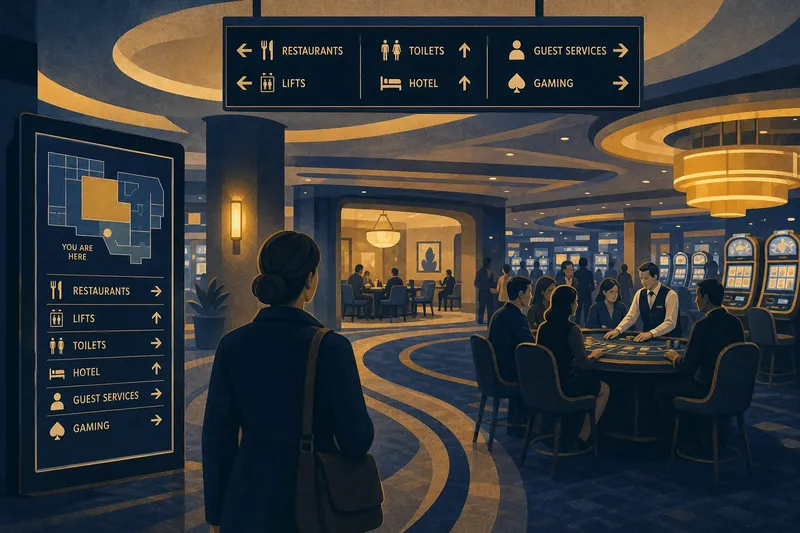
At the entrance, take a moment to locate the way back out. Then scan for the main signs: they may point towards restaurants, lifts, toilets, hotel areas, customer services or gaming sections. A map or directory near the doorway can help turn a large floor into a few recognisable destinations.
Look for fixed landmarks rather than trying to memorise every machine or table. A distinctive bar, a broad pillar, a reception desk or a stairway can serve as a reference point if the room feels different on the return journey. Casino floors often use similar colours and repeated layouts, so a simple landmark is more dependable than remembering a particular row of seats.
Say you enter with a friend and want to find a restaurant before meeting someone. You spot the directory, note the sign for the dining area and agree to meet again beside the lobby desk if you become separated. The expected result is a straightforward route and a familiar meeting point, without needing to cross the whole floor at random.
Keep the entrance or another easy landmark in view when choosing where to go first.
Follow the signs if you have a destination in mind
If you are looking for a particular service, use directional signs rather than following the busiest aisle. Signs may distinguish gaming areas from food, entertainment, hotel access or guest services. If wording is unclear, a staff member can point you towards the right corridor or explain whether a destination is on another level.
Read signs as practical information, not as a prompt to spend. Promotional displays can sit beside useful directions, but they serve different purposes. Look for the plain destination label, arrows and floor references. Where an area has an age restriction or entry condition, follow the posted rule and ask staff if you are unsure.
If you are visiting with someone who has limited mobility, prefer a route marked for lifts and step-free access rather than assuming the most direct-looking aisle is suitable. If you have sensory sensitivities, note where quieter corridors or seating areas appear on the directory before the room becomes tiring.
Choose the route that gets you to your actual destination, not the route with the most lights.
Read table areas by their pace and layout
Table areas have their own rhythm. Some are arranged in open clusters with space around the edges; others sit close together and draw a small crowd. The number of people gathered, the dealer’s pace and the sound of conversation can tell you how lively a section feels, even if you do not know the game.
Notice the difference between a viewing position and a place at the table. Standing back at the edge usually lets you watch without interrupting, while a chair or marked position may be intended for a participant. If you are unsure where visitors may stand, check with staff. Do not lean across the layout or touch chips, cards or equipment; the table is a working space, not a display case.
Consider what you want from the room. If you are curious about the atmosphere, a brief look from an open walkway may be enough. If the close conversation and concentrated attention feel uncomfortable, choose a route around the edge instead. There is no obligation to stay in a section just because you have entered it.
A quiet observer can stand back, watch the flow for a moment and leave when the room stops feeling comfortable.
Choose a quieter space if the floor feels intense
Casino floors can combine music, announcements, conversation and machine sounds. A quieter area may be a lounge, a corridor outside the gaming space, a restaurant seating area or a designated rest space. These places are not always silent, but they can offer a break from the close-packed activity.
If you are with a group, agree on a pause point before anyone needs one. A café entrance or a clearly signed lobby area is easier to find than “somewhere quieter”. If you are alone, use the directory or ask a staff member where seating is available away from the main floor.
Watch for changes in sound and crowding as you walk. A broad passage may feel easier than a narrow aisle even if both lead to the same place. If you start to feel rushed, step out of the flow where it is safe to do so, check your bearings and choose your next destination deliberately.
For a first visit, a calm break can be a destination in its own right.
What should you notice before moving further in?
Where is the nearest way back out?
Identify the entrance, lobby or another clearly signed exit route before exploring. Keeping one route in mind makes it easier to leave a crowded or unfamiliar area without hurriedly retracing your steps.
How can you tell a gaming area from a service area?
Read overhead signs and look for labels such as dining, lifts, guest services or gaming. If a sign is missing or ambiguous, ask a staff member rather than guessing from the décor.
Where can you stand without interrupting a table?
Stay on the public walkway and leave room for staff and visitors to pass. If you want to observe a table, keep back from its working edge and follow any posted guidance.
What should you do if you feel lost or overwhelmed?
Move to a safe place out of the main flow, then look for a directory, a familiar landmark or a staff member. You can also leave the floor and take a break; continuing to explore is optional.
Match your route to the kind of visit you want
Different visitors need different first routes. If you are meeting someone, choose a visible landmark and agree on it before splitting up. If you are heading to food or entertainment, follow the destination signs and avoid detours through crowded sections. If you are simply curious about the layout, take an outer walkway and look into each zone without committing to enter it.
For a visitor who wants a low-stimulation visit, a sensible order is often lobby, directory, destination and rest point. For someone accompanying a friend, it may be better to settle on a meeting place and a time to check in, while deciding independently whether to stay on the floor. These are ways to make the visit manageable, not instructions to take part in gambling.
- Meeting someone: Pick a fixed landmark that is easy to describe, such as the lobby desk.
- Finding a service: Check the directory and follow the named destination rather than drifting between signs.
- Watching briefly: Use an open public walkway and keep clear of tables and staff routes.
- Seeking a break: Look for lounge seating, a café or a quieter corridor away from the main activity.
- Feeling unsure: Pause, recheck the signs and ask staff for directions.
Before you move on, ask yourself whether your next stop has a clear name and route. If it does not, return to a landmark or get directions first. That small pause can make a first look around a casino floor feel less like being carried along by the room and more like choosing your own pace.